In the Spotlight
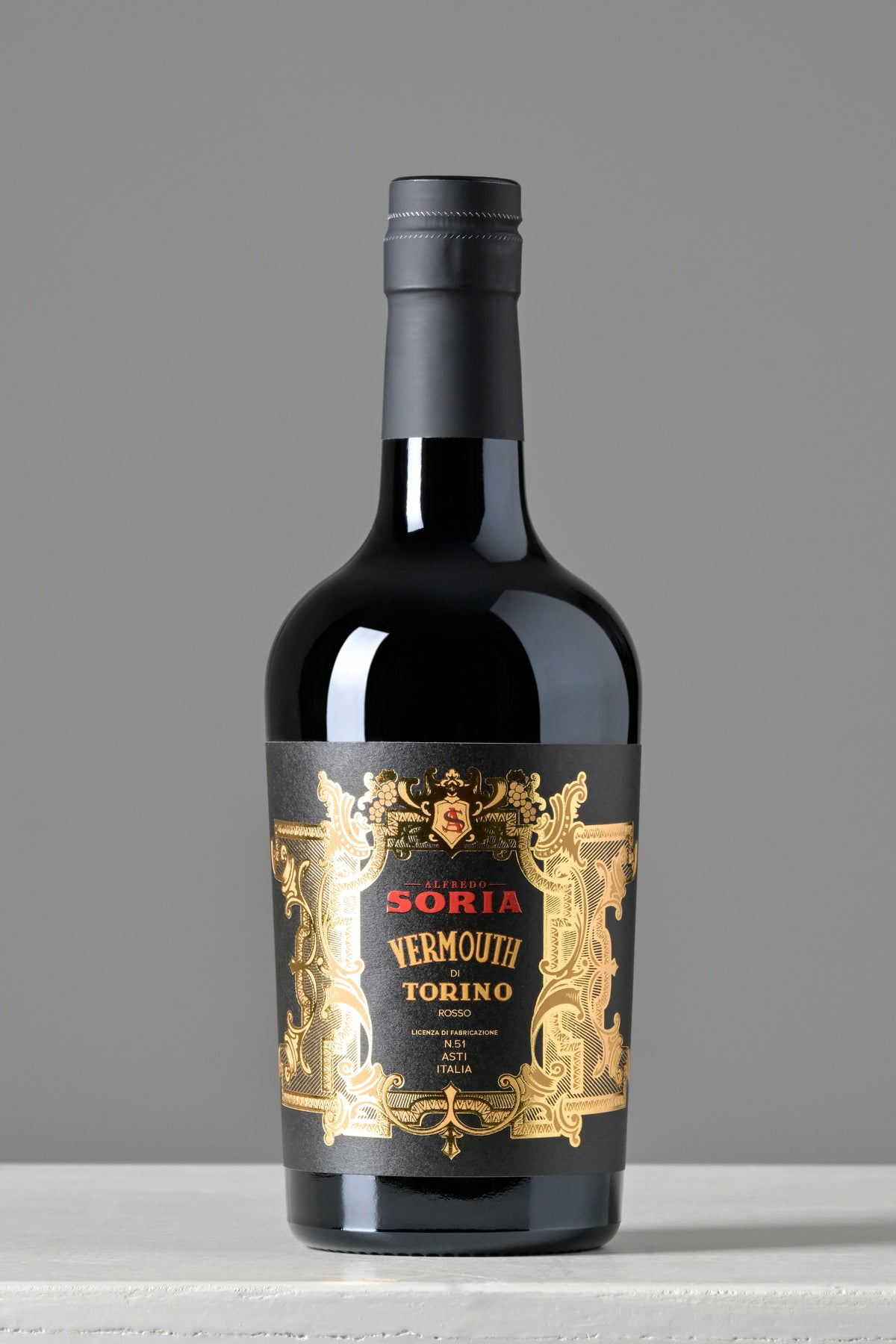
Before it was a bottle, it was a piece of paper. This is the story of that label, and of how a Vermouth di Torino is made, step by step.
Canelli, 1934
Canelli sits in the Moscato hills of Piedmont, now a UNESCO World Heritage landscape, and it is where the great aromatic and sparkling wine houses of Italy grew up. Vermouth itself began in nearby Turin at the end of the eighteenth century, and Canelli became one of its cradles. The Soria family were hoteliers here before they were winemakers, running some of southern Piedmont's best-known inns, and hospitality is still the spirit of the brand.
On 16 March 1934 the firm Alfredo Soria was formally established in Canelli to make wine, vermouth and sparkling wine. The paperwork survives in the historical archive of the Chamber of Commerce of Asti and Alessandria, and the brand appears in the 1938 yearbook of the Italian wine and liquor industry. By 1940 it was registered for export, with letters in the family archive describing trips to Paris, Lyon, Marseille and Nice.
The business carried on until 1971, then went silent, its recipes and labels kept safe by the family. In September 2024, Alfredo's great-granddaughter found an original label in the old family house in Canelli, perfectly preserved, and decided to bring the brand back as a gift to her grandmother, Alfredo's only daughter. The Heritage Edition is the first release of that revival, a tribute to the rediscovered 1934 label. Today the brand spans Turin and Singapore, which suits a name that was always meant to travel.
The wine underneath
Here is the thing most people do not know about vermouth: the rules for Vermouth di Torino require at least 75% of the bottle to be wine. Much of the industry treats that wine as a neutral background. Soria does the opposite and builds the vermouth on two named appellation wines, Piemonte Cortese DOC and Moscato d'Asti DOCG, just as Alfredo did.
Cortese brings freshness and a savoury edge. Moscato adds aromatic lift and part of the sweetness. On top of that base sit two Piedmontese wormwoods, grand and Roman, the defining heart of any authentic Vermouth di Torino, with a short list of local herbs and spices. The exact recipe stays a family secret.
Eight stages, no shortcuts
Alfredo Soria is made in the Monferrato hills of Asti, using the traditional Piedmontese method. This is what happens between a sack of dried herbs and a bottle on your table.
The botanicals are ground to a fine powder in an old hammer mill, ready for infusion.
The powder sits on a grid inside an infuser while a hydroalcoholic solution percolates through it in a continuous loop at room temperature, drawing out every aromatic compound without cooking it.
The extract rests. Whatever clouds it settles to the bottom, leaving a clear, clean extract ready for blending.
The extract meets the wine, alcohol and sugar, following the family recipe, so that one solution holds every ingredient.
The blend is chilled in steel tanks. Solid particles drop out and the liquid turns clear.
It passes through a plate filter, used in place of the traditional bag filters, to catch any solids that remain.
The clear vermouth rests in steel, gaining body and structure.
It is bottled, labelled and left to settle for as long as it needs before it is released.
In the glass
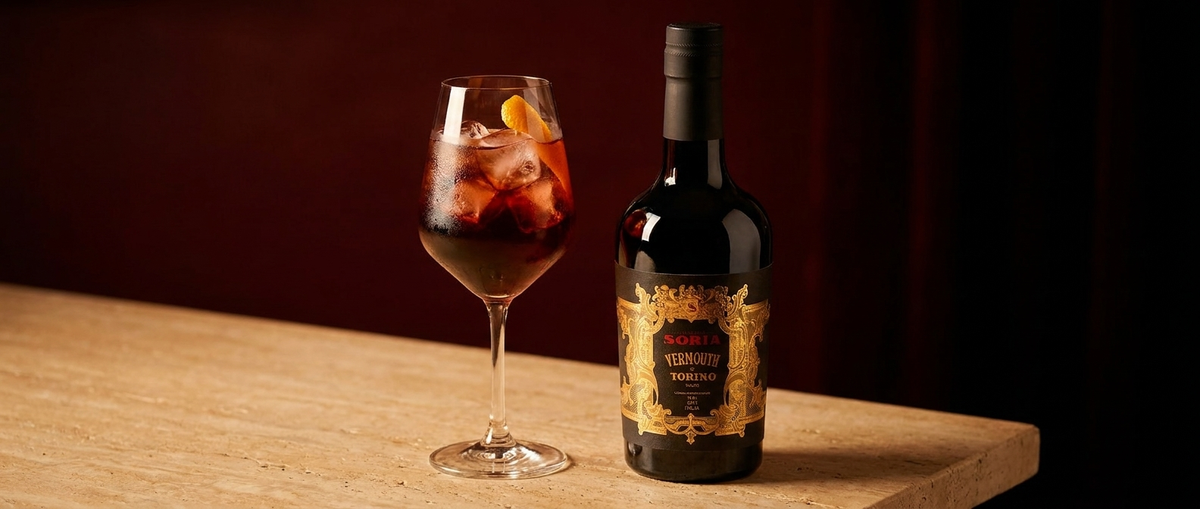
Amber red and bright. On the nose, fresh herbs and wormwood first, then sweet spice, a touch of orange zest and the grapey perfume of Moscato. On the palate, sweetness held up by Cortese's freshness and savoury edge, with an elegant wormwood bitterness to balance.
Pour it neat or over ice with a twist of orange, at 8 to 10 °C. It is the base of the Soria Spritz, and it gives character to a Negroni, Manhattan or Americano. At the table, think aged cheeses, olives and toasted nuts, the classic Piedmontese aperitivo. Once opened, reseal it and keep it in the fridge, and finish it within two to three months.
Filters
1 product